Amalfi Coast With Kids – Our Ultimate Family Guide
Is the Amalfi Coast worth visiting?
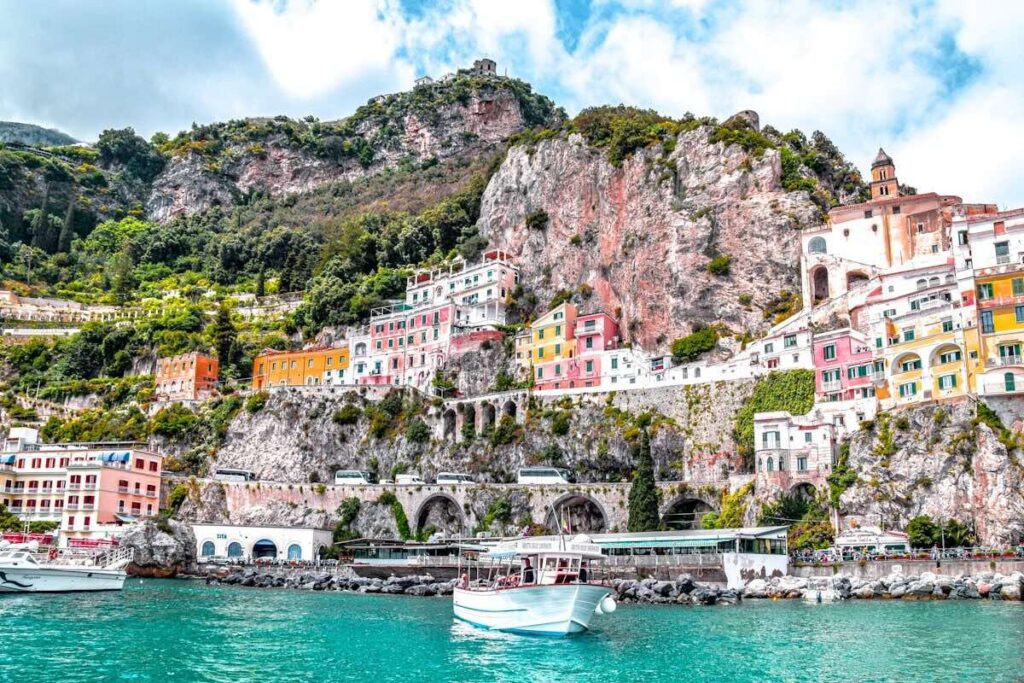
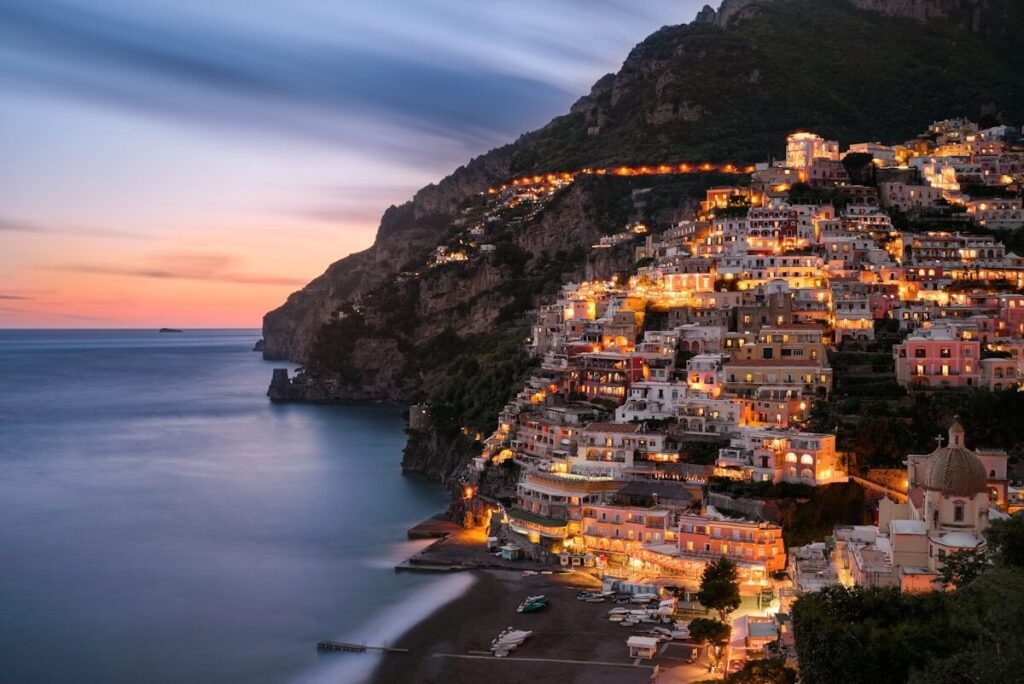
So you’re planning a trip to the Amalfi Coast with kids, or considering if it’s worth a visit? First off, the Amalfi Coast really does live up to its picture-perfect postcard, and we couldn’t knock how exquisitely beautiful the region is. Think staggering colourful towns perched on the edges of cliffs, cobbled winding streets, charming marinas lining shimmering waters, it really looks like it’s been created by the Gods. Would we recommend travelling to the Amalfi Coast? 100% yes, however, for those travelling there with babies or young children, some careful consideration needs to take place to successfully navigate the area and have a stress-free vacation.
Where is the Amalfi Coast?
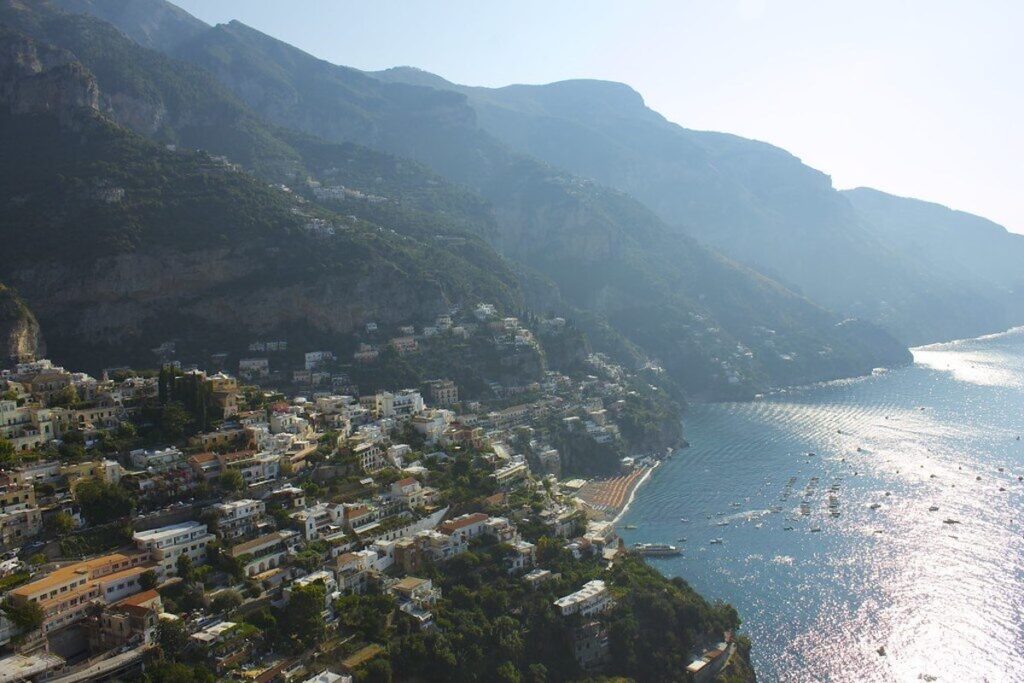
The Amalfi Coast sits in southern Italy, just below Naples, stretching along the Sorrentine Peninsula. It’s really just a handful of tiny coastal towns strung together by one incredibly twisty cliffside road. Just off the coast, there are a few famous islands you might have heard of—Capri, Ischia, and Procida.
How many days in Amalfi Coast
The longer you can stay there, the more in tune you’ll become with the place and get a real vibe for the area and all the individual little towns, which are all so unique and vary greatly.
The least amount of time we’d recommend visiting for is 3-4 days, which is enough to see the highlights, like Positano, Amalfi and maybe Ravello and get some beach time in. Many people do this if they’re stopping off or combining it with Naples or Sorrento.
Going for a minimum of a week is ideal if you want a more relaxed pace. You’ll be able to explore more towns, maybe a day trip to one of the islands and still have time to kick back on a beach or two.
Two weeks plus will allow you to do all of the above, at a relaxed, slower pace (ideal if travelling with kids). You’ll be able to experience all of the above, along with some hikes in the area, day trips to all of the islands, beach days and drives out to some of the smaller villages, off the main tourist trail.
Best time to visit Amalfi Coast
Spring (March–May)
Spring was the time we opted to visit the Amalfi Coast, during the Easter school holidays, and it turned out to be a nice middle ground. The weather was cooler, so we could easily tolerate walking around, climbing steps, and actually exploring without feeling drained by the heat. It was still busy, because let’s be honest, it’s the Amalfi Coast after all, (it would still be beautiful walking around in the rain), but nothing like the intensity of summer.
We were able to move around more easily, enjoy the views without constantly peering over people’s heads, and take in the beauty of the coastline without feeling rushed or boxed in. The only thing to be prepared for is the sea and swimming pool temperatures, which are still blooming cold following the winter months, so if you’ve got a water baby, prepare them for needing to be extra brave, or better still, make sure you’re staying somewhere that’s got a heated pool.
Summer (June–August)
Summer is beautiful and offers the best weather on the Amalfi Coast, with long days of sunshine and temperatures reaching highs of 31°C. That said, with the warm climate comes the hordes of holiday makers, making the place an intense tourist trap with long queues, inflated prices, and an overall lack of space, as let’s be honest, the Amalfi Coast is rather small in the grand scheme of things. That said, if your kids love swimming and you’re happy planning ahead, it can still be a great trip, as long as you’re ready and don’t mind starting the days nice and early to make sure you get sun beds, parking spaces, etc.
Autumn (September–November)
Autumn is another fab time to visit the Amalfi Coast with kids. September still feels summery, so the sea is warm enough for a quick dip, but the crowds have thinned, which makes wandering around towns way more enjoyable. By October, it’s cooler, and you’ll probably find yourself layering up a bit, but it’s still lovely for sightseeing and exploring at a slower pace. The ferries and buses are less crowded too, which is a huge bonus with kids in tow. The only thing to keep in mind is that some restaurants or attractions start to close for the season, so it’s worth double-checking before you head out, but overall, it’s a really sweet, peaceful time to enjoy the coast without feeling rushed.
Winter (December–February)
Winter is a much quieter affair, with many shops and hotels closing down for the season. Expect to be greeted with temperatures ranging from 8°C to 15°C, but most will feel far too cold for a dip in the sea. The major positive of visiting this season is the dramatically reduced crowds, accommodation and restaurant prices. Although you won’t get to see the area in all its glory, it will feel like you’re experiencing the place prior to it getting world famous and will still have its unique charm, not spoiled by tourists.
How to get to the Amalfi Coast
Getting to the Amalfi Coast isn’t really what we’d call difficult, but it can be a bit disjointed and involve a few different steps. There’s no direct airport or train station on the coast itself, so you’ll need to plan a combination of flights, trains, ferries, or road transfers depending on where you’re coming from and where you’re staying.
Most families arrive via Naples, which is the main gateway to the Amalfi Coast. Naples has an international airport, a major train station, and good onward connections, making it the most straightforward starting point. From there, it’s all about choosing the option that best fits your family’s energy levels and patience.
Flying into Naples
Most families fly into Naples International Airport (NAP), which is the closest airport to the Amalfi Coast. Even then, you’re still around 1–2 hours away from your final destination, depending on traffic and how you continue the journey. This is where things can feel a bit overwhelming after a long flight, so it’s worth thinking ahead.
From the airport, you can:
- Book a private transfer straight to your hotel (easiest with kids, but most expensive)
- Take a taxi or shuttle to Naples city centre
- Head to the train station to continue your journey by rail
If you’re arriving late in the day, a private transfer or overnight stay in Naples can be a much calmer option than trying to tackle multiple connections with tired little ones.
Travelling by Train
If you’re already in Italy, travelling by train to Naples is often the simplest option. High-speed trains run frequently from cities like Rome, Florence and Milan, and arrive at Napoli Centrale. From here, you’ll need to switch to another form of transport to reach the Amalfi Coast.
Many people then:
- Take the Circumvesuviana train to Sorrento
- Use a ferry from Naples or Sorrento
- Arrange a transfer or taxi directly from the station
The Circumvesuviana is cheap and frequent, but it can be crowded and basic, so it’s not always the most comfortable choice with children and luggage. It works, but it’s not the relaxing start you might imagine.
Arriving via Sorrento
Sorrento is another popular jumping-off point and can be a good option for families. It’s easier to reach than many Amalfi Coast towns and has regular ferry connections along the coast. Some families choose to stay a night or two here to break up the journey before continuing on.
From Sorrento, you can:
- Take a ferry to places like Positano or Amalfi
- Use a private transfer or taxi
- Drive along the coast (if you’ve hired a car)
This can be a nice way to ease into the trip rather than doing everything in one go.
Getting There by Ferry
If you’re visiting between spring and early autumn, ferries are a brilliant way to arrive on the Amalfi Coast. Boats run from Naples, Sorrento, Capri and Salerno to many of the main coastal towns. Arriving by water would give you the shock of your life when you see the scenery, not to mention eliminating the stress of being on the road there.
The main thing to remember is that ferries are seasonal and weather-dependent, and they only serve towns with ports. If your accommodation is higher up or inland, you’ll still need a bus or taxi once you arrive.
Driving to the Amalfi Coast
Driving to the Amalfi Coast is possible, but it’s not something everyone enjoys. Roads are narrow and winding, traffic can be heavy, and parking is limited and expensive once you arrive. Some families choose to hire a car only for part of the trip, or pick one up after they’ve already reached their base.
If you’re planning to drive, it’s worth weighing up whether you actually need a car for the whole stay, or whether a mix of ferries, buses, and the odd transfer might be less stressful overall.
We chose to do a self-drive, but in fact kept our car the entire way down from Lake Garda through Tuscany and down to Amalfi. We appreciated the door-to-door convenience, but the roads there are not for the faint-hearted, especially when you first arrive.
How to get around on the
Amalfi Coast
You will need to carefully consider how you’re going to get around the Amalfi Coast, as it can be a bit of a nightmare if done incorrectly, especially with kids in tow. This was the aspect of our trip that we found the most difficult and cumbersome, and we wished we had been a bit more prepared for our visit. You need to plan how you’re going to move between towns, factoring in little legs, luggage, and nap times, which can have the potential to ruin a holiday if you haven’t done your due diligence.
Driving on the Amalfi Coast
Having a car on the Amalfi Coast sounds ideal in theory. You’ve got freedom, you’re not tied to timetables, and if the kids need a break or a snack stop, you can just pull over. And to be fair, that flexibility can be really helpful.
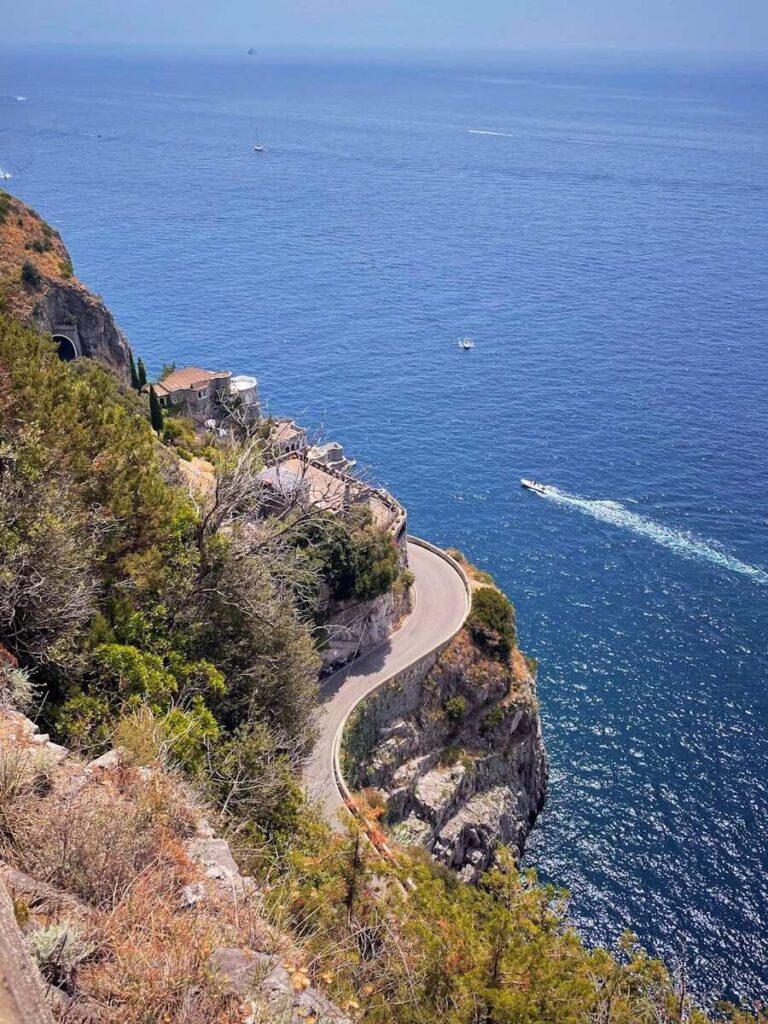
The reality, though, is that driving here takes a bit of nerve. Be prepared for busy, narrow roads that are full of sharp bends, plus very difficult parking, especially in Positano, which is where things get complicated. Most on-street spaces are for locals, so visitors usually end up in one of the main car parks as you drive down into town. They’re well placed, but they’re not cheap. Even outside peak summer, parking for the day can easily cost €20–30, and more during busier months. We paid €10 per hour, and given we were planning on heading to the beach, going for lunch and a snoop around, we racked up €40 parking!
You also don’t usually park the car yourself. Instead, you hand over the keys and let the attendants squeeze it into whatever space they’ve managed to create, moving cars around constantly to make it all fit. It feels slightly chaotic at first, but it’s normal there — and it definitely explains why so many cars around the coast have a few bumps and scratches.
There are a handful of cheaper or free parking spots higher up in the hills around places like Montepertuso or Nocelle, but they come with strings attached. You’ll be walking a long way down into Positano (and an even longer way back up), or relying on buses, which isn’t always ideal with tired kids at the end of the day.
If you do decide to drive, getting there early makes a big difference, as by mid-morning, spaces will be gone, particularly during school holidays. If you’re staying in a hotel, definitely ask if they offer free parking in advance, as some places can organise it for you and save a lot of stress. Once parked, some families find it far easier to explore on foot or use public transport rather than keep moving the car.
Bus travel on the Amalfi Coast
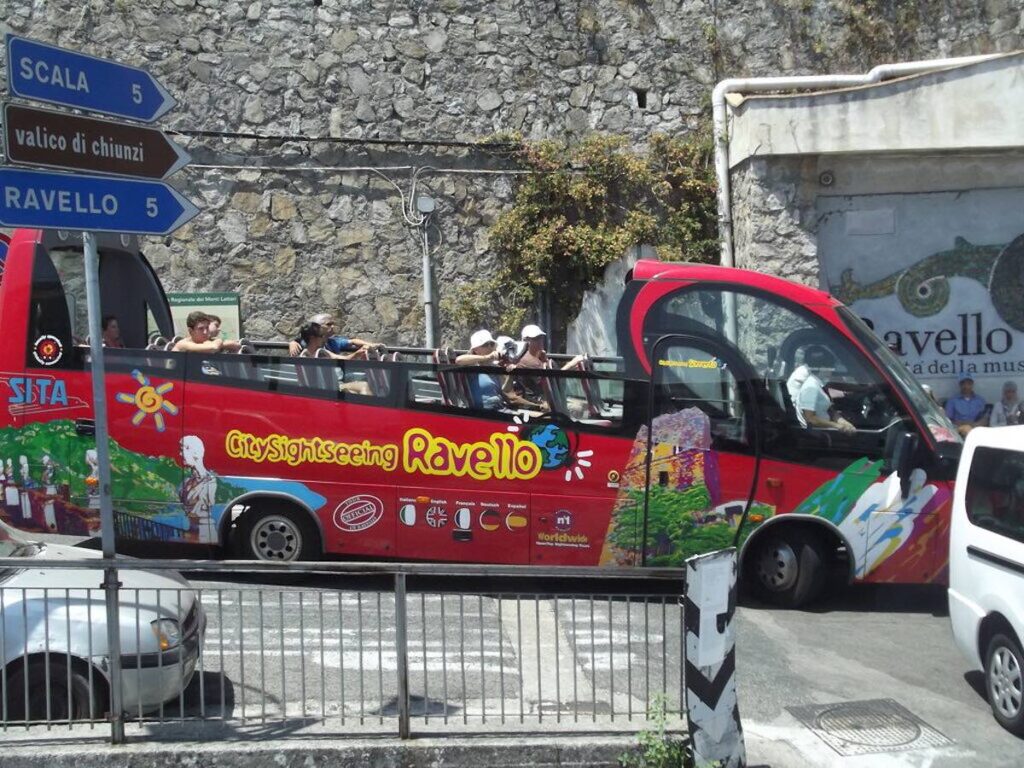
Buses are one of the cheapest ways to get around the Amalfi Coast, and on paper, they sound like a sensible option. They link most of the main towns, run 7 days a week, from roughly 6 am until around 9:30 pm (with services running a bit later at weekends). Straight away, they take away the stress of driving and mean you don’t have to think about parking. In reality, they take a bit of patience, especially if you’re travelling with kids. At busy times, they can be packed, hot, and only have standing-room-only, so if you’ve got tired legs, a buggy, or are prone to travel sickness…good luck!
It’s also worth knowing that you can’t buy tickets on the buses themselves. You need to pick them up in advance from small local shops like tobacconists, newsstands, or even the odd café or bar, which is easy enough if you know ahead of time, but stressful if you don’t. Buses don’t stick rigidly to timetables, as traffic, crowds, and road conditions all play a part in potentially delaying them, so don’t be too annoyed if a bus turns up sporadically off timetable. If the coast is busy, more buses usually appear, but there’s no real pattern to it; you’ll need to just wait at the stop, and eventually one will turn up. The biggest thing to keep in mind, especially with children, is not missing the last bus back to where you’re staying, as late-night alternatives are limited and taxis can be very expensive.
Private Transfers & Taxis around the Amalfi Coast
Private transfers and taxis are, without a doubt, the easiest way to get around the Amalfi Coast, but they come at a price. To get from Amalfi town to Positano, for example, you’re looking at €90–120 one way, depending on the time of day and season. For some, if taking into account the cost of hiring a car, plus the stress of a self-drive, not to mention the astronomical parking expenses, a private transfer/ taxi may be well justified. It will be great if you’re travelling with kids, luggage, or just want to avoid queues, crowds, and timetables altogether, and it will feel like a bit of a lifesaver. You’re picked up where you are, dropped exactly where you need to be, and there’s no juggling bags or worrying about standing on a packed bus.
Availability may be a bit hit and miss, so consider booking ahead rather than assuming you’ll grab one at the last minute, especially for airport runs. Many hotels will be able to arrange transfers for you, which will hopefully take the stress out and avoid any awkward haggling. Consider maybe using them for a few journeys, like airport transfers, hotel hops, or on those days when you just can’t face navigating the roads yourself, or tackling the bus!
Boat and ferry around the Amalfi Coast
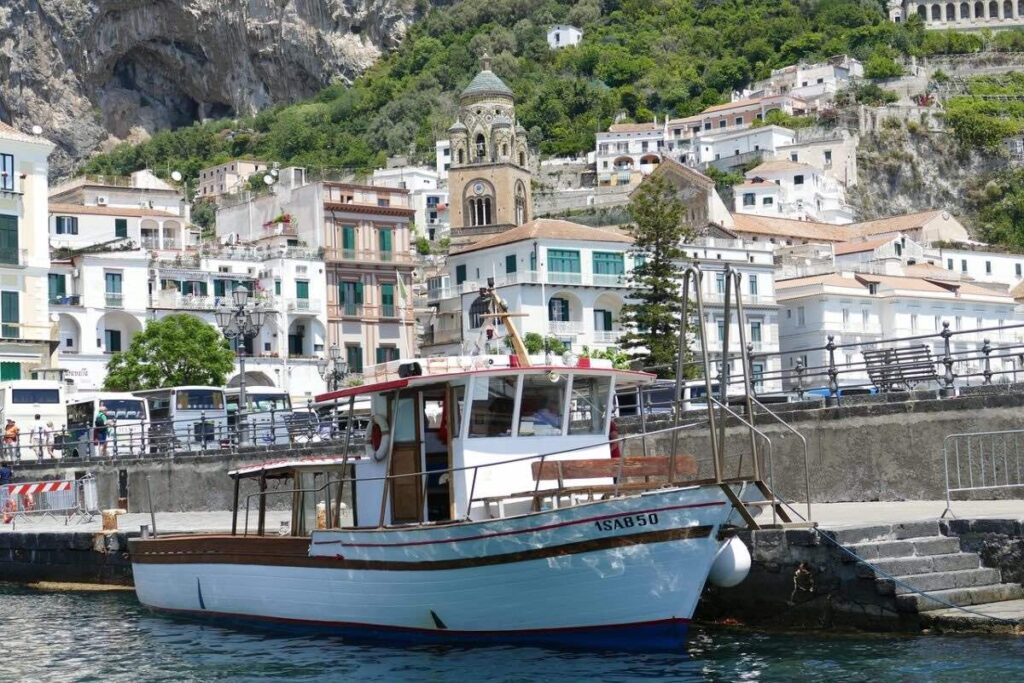
This is, without a doubt, the most scenic means of travel around the Amalfi Coast, as the best views of the towns perched on the side of the mountains are definitely from the water. Obviously, private chartered boats will be expensive, but the public ferry is a cheaper way to travel, compared to private transfers and even at times compared to self-driving, especially if you want to spend a full day in a town, which would require hours of extortionate parking. The ferry also eliminates having to tackle the chaotic roads winding along the cliff edge and makes for a calmer way to travel, without bad traffic and trying to find parking.
It’s worth knowing, though, that ferries and boat transfers only really work for the towns that sit right on the water’s edge and have a proper port. They’re great for places like Positano, Amalfi, Maiori or Minori, but they won’t help you get everywhere. If you want to get to Ravello, for example, you can’t arrive there by boat, due to it being off the coast and higher up the mountains, so you’d need to take a ferry to Amalfi first and then hop on a bus or taxi up the hill. The same goes for places like Nocelle or Montepertuso above Positano; boats will get you to the bottom, but you’ll still have a climb or another form of transport to finish the journey.
If you’re visiting a town purely for its beach, then the ferry will be perfect to get there, but for anything higher up or slightly off the main stretch, you’ll have to mix it up a bit with your means of transport.
Getting around the Amalfi Coast on foot
You’re going to have to adopt this means of transport quite considerably if you want to explore the Amalfi Coast and all its beautiful little towns. With them being perched on the sides of mountains comes a lot of hill walking and steps, to be able to take in the views, little side streets, and beach areas. This is where any parent who is utterly obsessed with their pram (and rightly so) may need to either consider using a baby carrier or be prepared to carry their pram up and down lots of steps. If your child is at the toddling phase, make sure you keep an extra close eye on them with all the steps and sheer drop-offs at view points.
Amalfi Coast towns and villages
Every town along the Amalfi Coast feels slightly different. Some are busy and convenient, others are quieter and more traditional, and a few are absolutely stunning but come with a bit of hard work if you’ve got kids with you. Looking past the photos and understanding what each place is actually like day to day makes choosing where to stay (or even just visit) a lot easier.
Amalfi town
This is the biggest town on the Amalfi Coast and often ends up being the base for families. If we were to return again and have to choose one town to stay in, we would probably pick here. It may not be as quaint and picturesque as other towns along the coast, and granted, it can get busy, but this is what also makes life simpler in some aspects.
Transport links are strong, as it has the largest port, and finding somewhere to park the car tends to be a bit easier due to there being more spaces available than elsewhere in other towns. There’s a good array of places to eat, not just around the main square, but off down the tiny side roads and gelato stalls as far as the eye can see. You’ll find lots of places to stay, from hotels, guesthouses, to self-catering accommodations/Airbnbs, so if you’re booking last minute, this is probably your best bet.
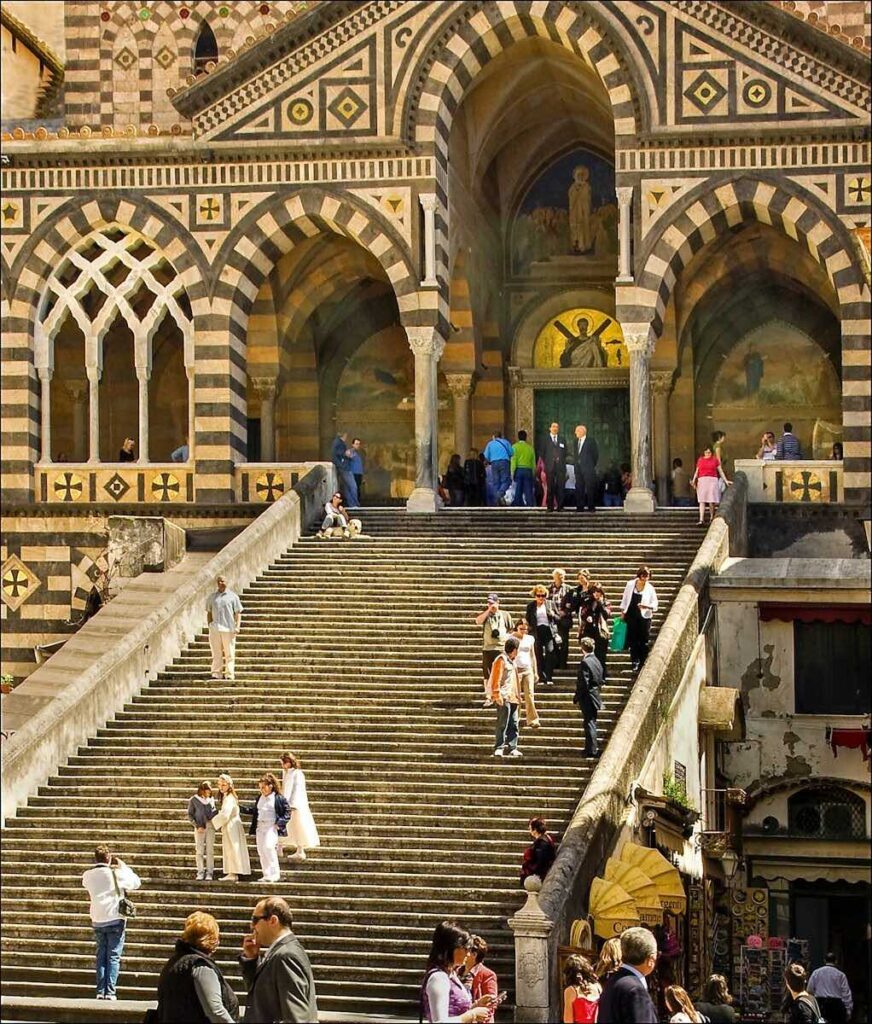
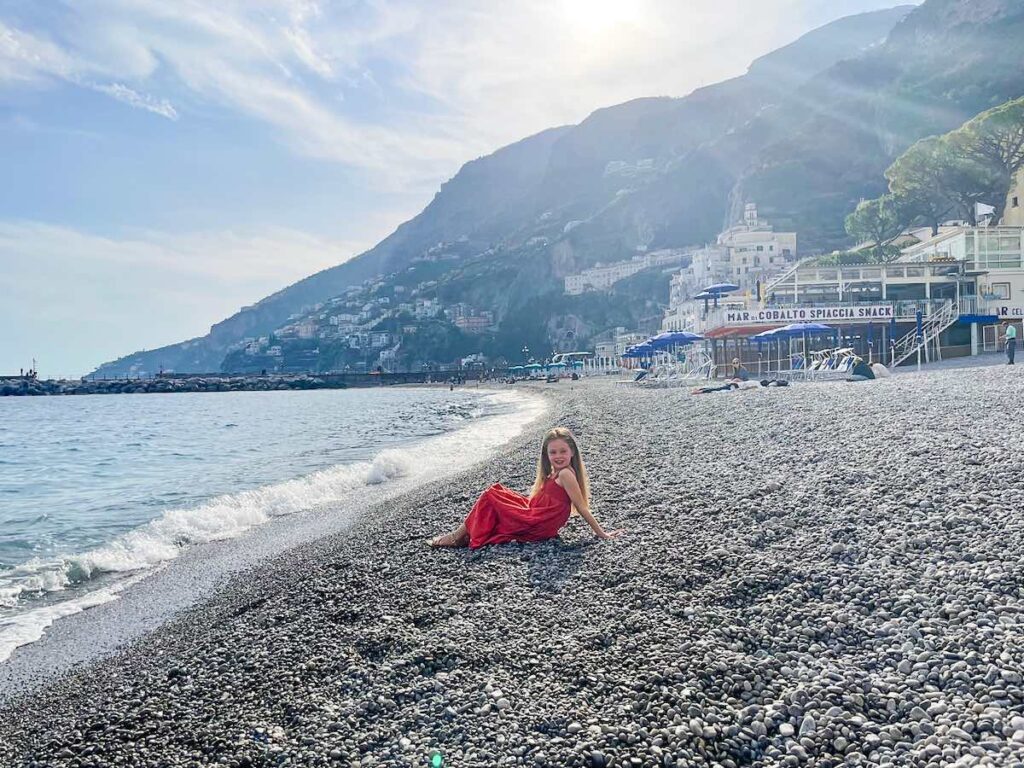
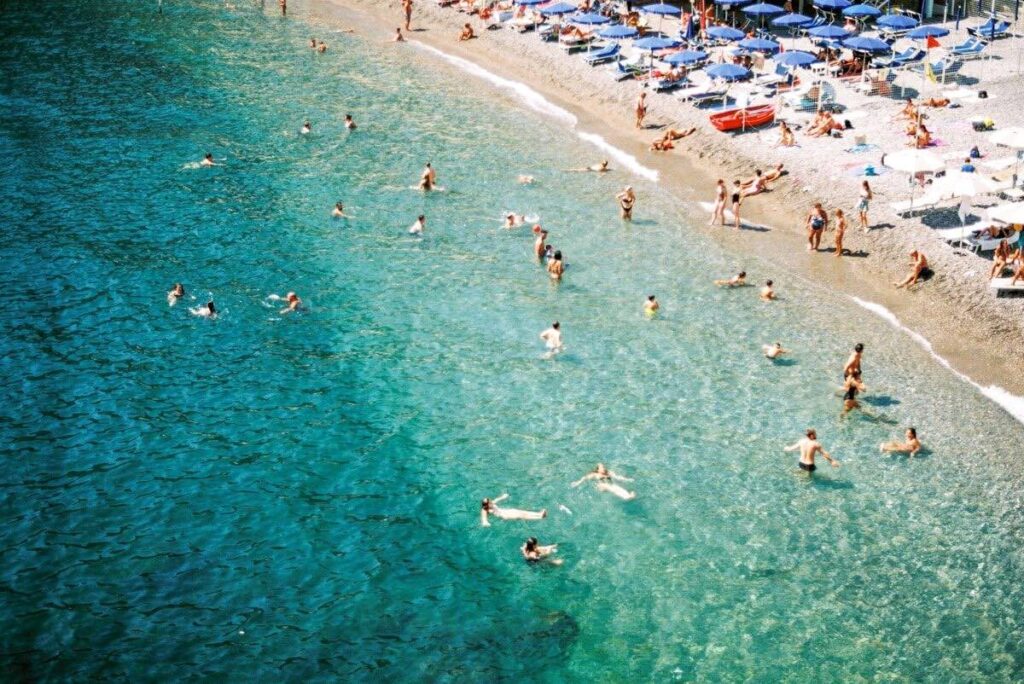
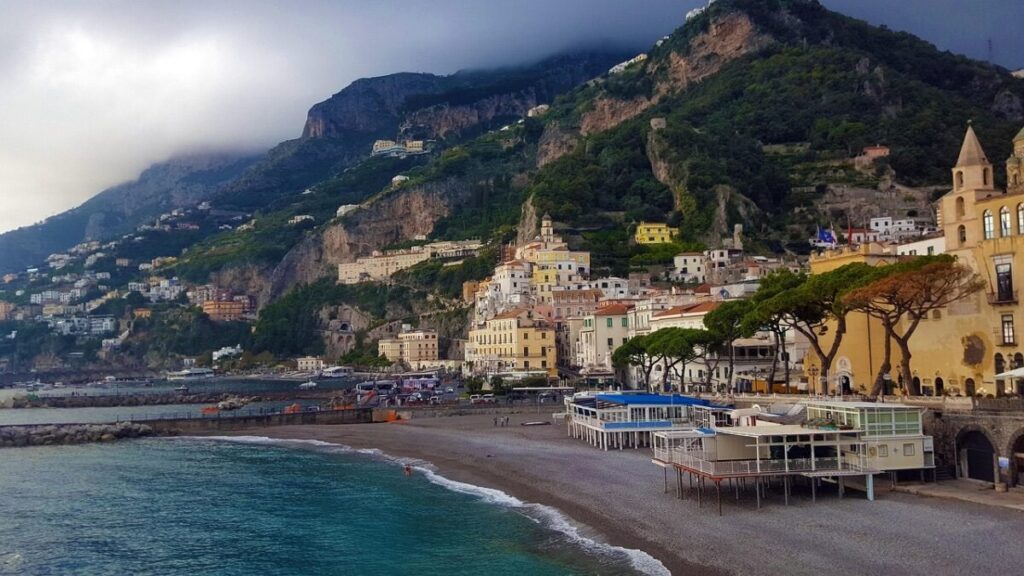
The beach front is typical of the Amalfi coast in peak season, with parasols lining the stretch, but when we visited in April, it was glorious, with a few to hire, but still lots of space. The waters are crystal clear, and although it’s a pebbled beach (so bring your water shoes), there’s beautiful smooth sea glass to spot amongst it. There’s a small play area right next to the beach and a few restaurants to grab lunch at.
Positano
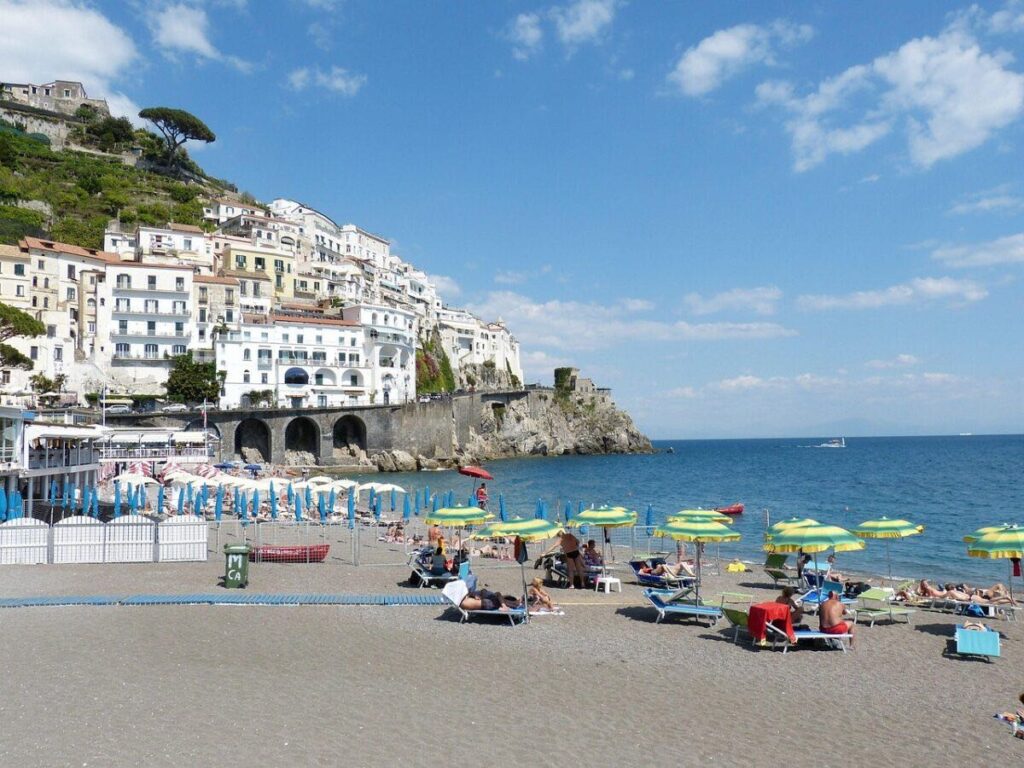
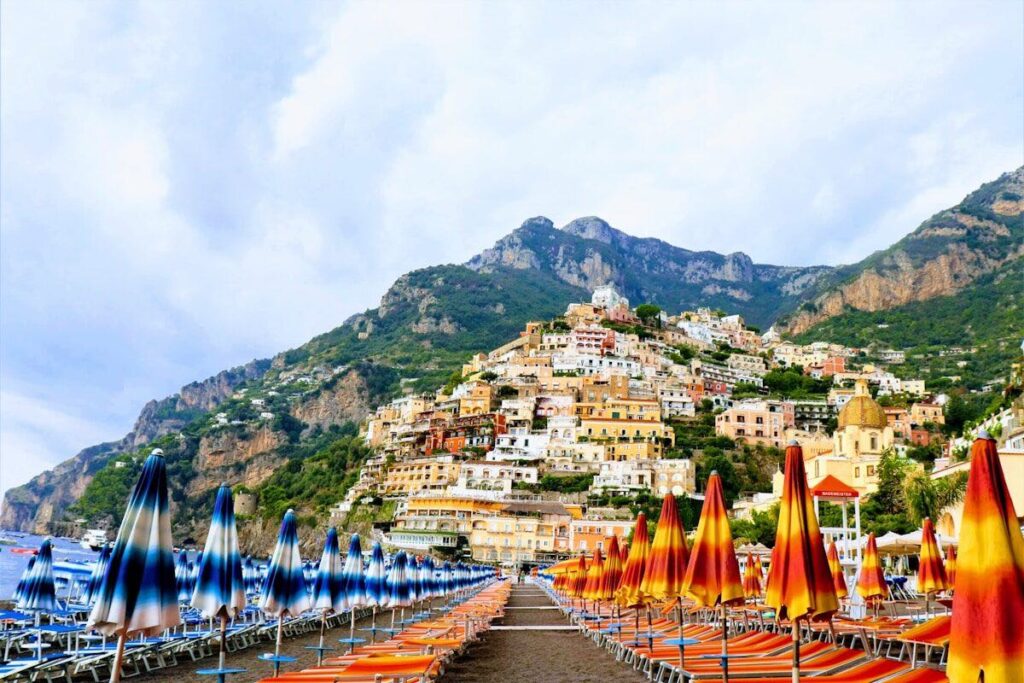
We can’t deny it, Positano is absolutely stunning. It’s one of those places you’ve seen in photos, and yet nothing really prepares you for it in real life. The long walk from the top of the hill down to the beach is just lovely. You pass all these quaint little shops selling pottery, crafts, flowers, and picturesque clothes hanging from trees. There are cafés, tiny restaurants, and little boutiques tucked away in every corner, so you could easily lose a few hours just exploring.
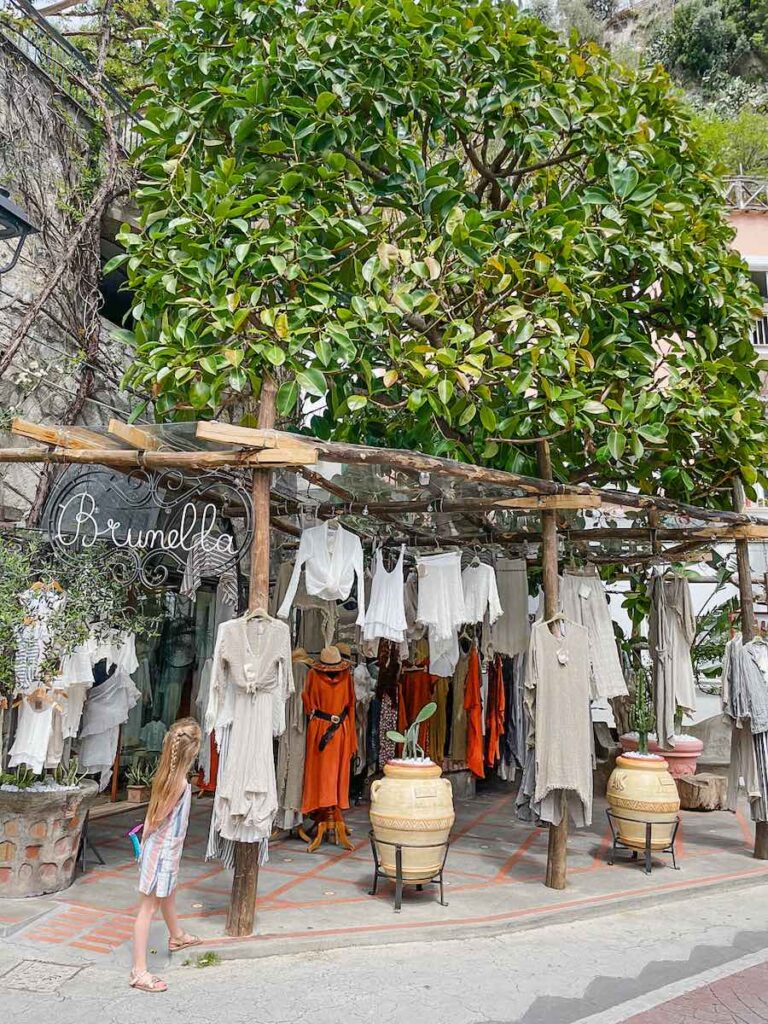
The best bit, without a doubt, is the view from the beach. When you finally get down there and look back up at all the houses clinging to the hillside, it is jaw-dropping. The beach has sunbeds and parasols if you want them, and there are plenty of restaurants around, so you could easily spend the whole day there without getting bored.
Now for the reality check. Positano is busy. Like, really busy. We went in April and it was already buzzing, so we can only imagine what it is like in peak summer. The town has this very polished, sophisticated vibe. You can imagine celebrities and millionaires strolling past, which is fun for people watching, but also a little intimidating when you’re on a normal budget. It is glamorous and stylish, but not exactly the place you will feel completely at home if you are more low-key.
Let’s not forget to mention parking, it’s honestly a nightmare! Unless you get there ridiculously early, finding a space is like trying to find a needle in a haystack. The closer you get to the beach, the more expensive it gets. We drove around for what felt like forever before finally finding a spot near the top of the hill, paying $40 for just four hours. You don’t park it yourself. A parking attendant shuffles it into the tiniest space you could imagine, moving other cars around like it is some kind of car Tetris.
That said, we are really glad we went. Positano is one of those places you have to see at least once, even if it is just for a day trip, but we wouldn’t recommend using it as a base.
Ravello
Ravello was our favourite town that we visited whilst on the Amalfi Coast, mainly because it was a lot quieter than the other towns in the area, so crowds were less, and we felt it had a more rustic charm to it than the tourist traps nearby. You can still spot sea views in Ravello, from certain viewpoints, but it’s set 3-4km off the coast, higher up in the hills.
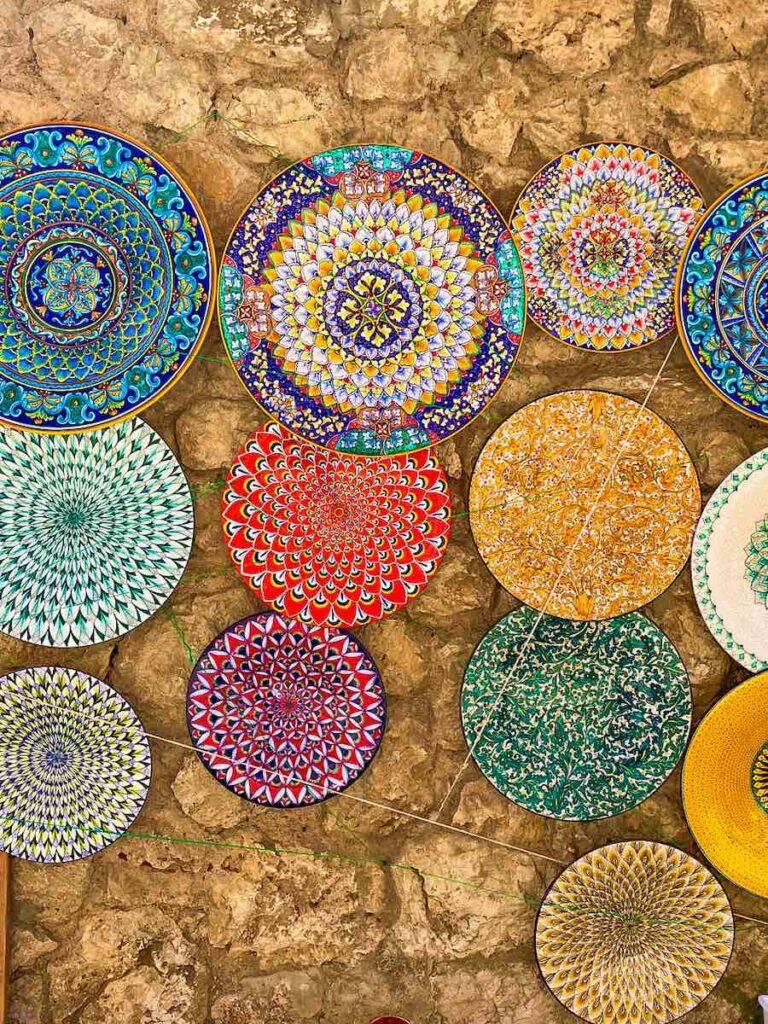
The town itself is compact and easy to walk around, with a pretty main square, cafés you can stop at without fighting for a table, and space for children to run around. The only thing you’ll need to watch if you’re going there with kids is the many ceramic shops, which have their plates and bowls overflowing out of the shops, perched on the floor and walls for customers to see. It’s what gives the place its character, but we had to guide Luca away a few times, as they are so colourful and attractive, he was eager to get hold of them.
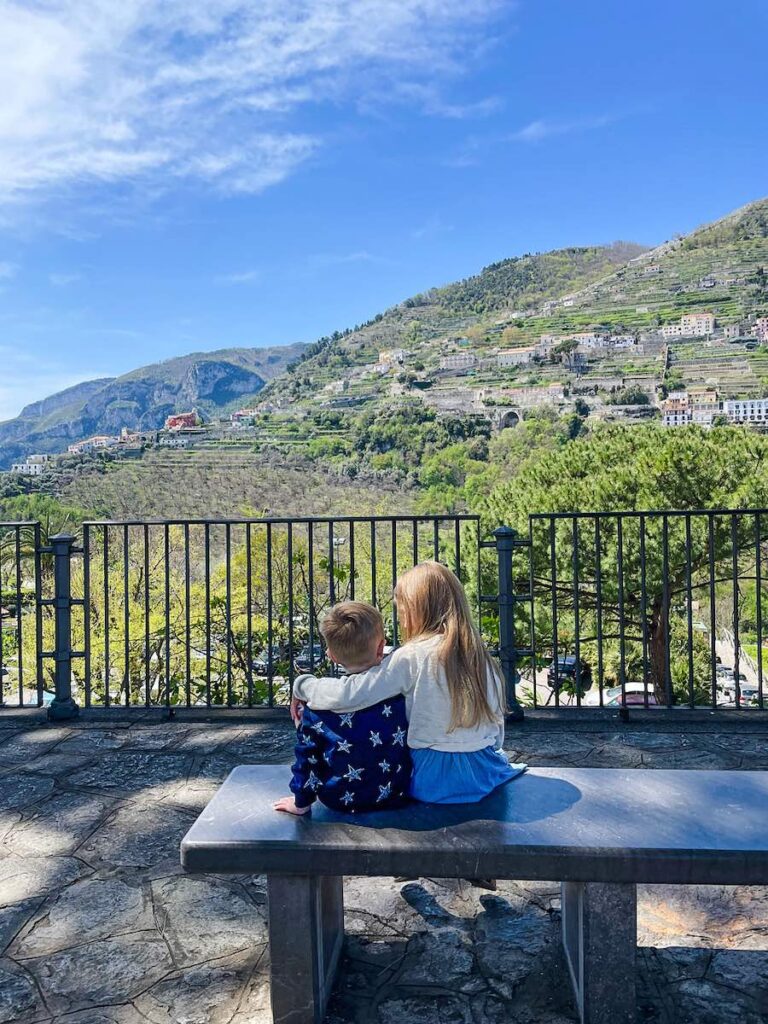
We’d recommend having a stroll up to Villa Rufolo and Villa Cimbron, which are real highlights, and even if gardens aren’t usually your thing, the views from the terraces are jaw-dropping, plus it’s the perfect place to let the kids blow off some steam and play hide and seek. If you visit in summer, it also offers lots of shade to cool down in the heat.
You’ll have to make your way to Ravello by bus, taxi, or car from Amalfi, and be prepared, the road up is steep and winding. If you want to have an easier time parking, aim to get there earlier when it’s quieter.
Maiori
Maiori was the closest coastal town to our Airbnb in Tramonti, so we ended up spending some time enjoying the beach and soaking up the vibes. It’s probably the best town to base yourself in if you’re travelling to the Amalfi Coast with kids. It’s not as striking to the eye as Positano, and it’s got more concrete buildings, which may not be as appealing, but it’s much more reasonably priced and practical to get around. The town is surprisingly flat, which makes walking around pushing a pram doable, and it feels more open and less hectic than other spots nearby.
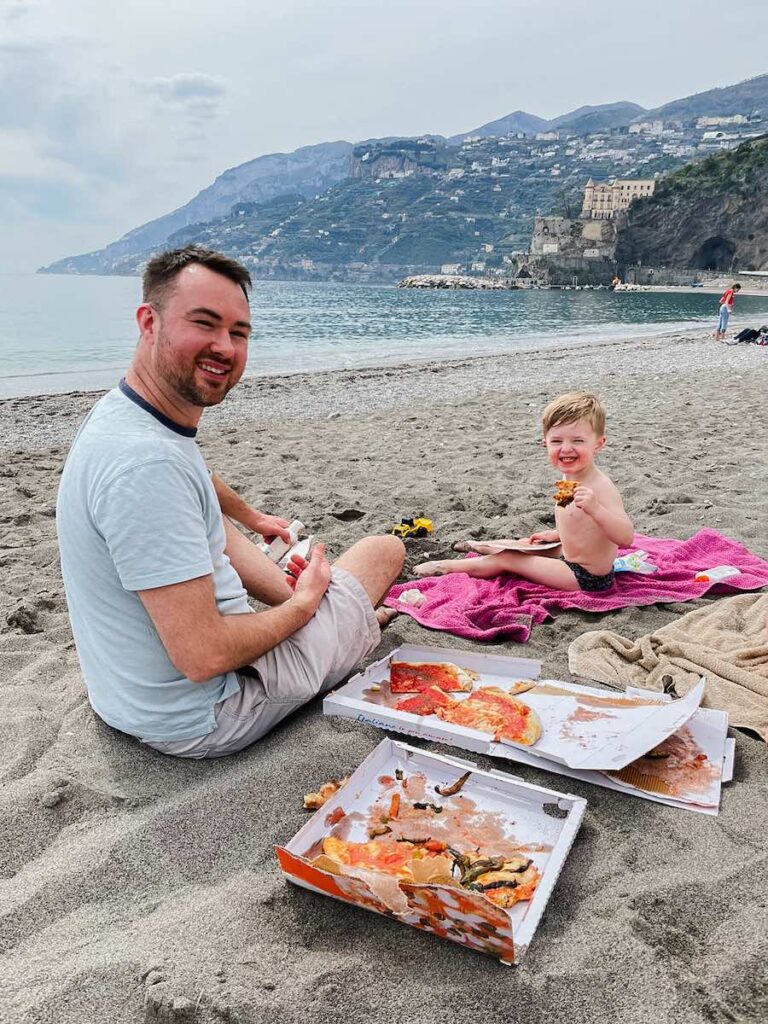
Granted, summertime in Maiori will be pretty busy, but in April, we were surprised by how quiet it was. We almost got the whole beach to ourselves! The beach is the main attraction for families, as it’s one of the only sandy beaches on the coast and on a good day, the sea is like a mill pond with very little waves. You’ll find a decent range of things to keep little ones entertained apart from sea and sand, with a small play area, some small fairground rides, cafes and restaurants. Our usual go-to was ordering a takeaway pizza and eating it on the beach – perfection.
Maiori’s accommodation is also more affordable than Amalfi or Positano, with a good selection of Airbnbs and hotels to choose from. It’s also got its own port, so getting around to nearby towns by ferry is doable.
Minori
Minori town is Maiori’s little sister, which you can walk to in about 20 minutes. Most people only see Minori when they drive through it to get to the more popular towns, but if you’re after a quiet place to stay away from the hustle and bustle, it may be a good choice for you. It’s got a distinct local feel to it, with a small sandy beach and promenade. The beachfront is flat, lined with a few cafes and restaurants, and it gets the sun all day.
Praiano
Praiano sits between Positano and Amalfi, but it feels miles away from both. It’s quieter, slower, and a lot more local. The only thing it has in common with Positano is that it is built into the cliffs, so there are a lot of steps, which families with small children may find difficult to get around. There isn’t loads to do, but it’s nice to wander, stop for a drink, let the kids mooch about, with no one rushing you along. Because it faces west, the evenings are lovely. The sun hangs around, and you get those long, calm sunsets without having to fight crowds for a spot. Gavitella beach is small but family-friendly, and it’s one of the few places where you can still be on the beach as the sun goes down, especially in the cooler months.
Praiano doesn’t have a main ferry port, so most people get to the bigger towns either by bus along the cliff road or by hiring a water taxi from the small marina down near the beach. The bus is cheap and fairly frequent, while a water taxi is faster and gorgeous, but more of a treat price-wise.
Cetarais
Cetarais is another quaint village, where you’ll find fewer crowds with a nice local feel. The harbour is full of fishing boats as opposed to tourist ferries, and if you like anchovies, this is the place to come and try them, along with their famous anchovy sauce (colatura di alici)
The beach is pebbly and usually pretty calm, and it’s nowhere near as busy as the bigger towns along the coast. Cetara suits people who want a peaceful stop, a good meal, and a glimpse of everyday life on the Amalfi Coast, rather than crowds and sightseeing.
Atrani
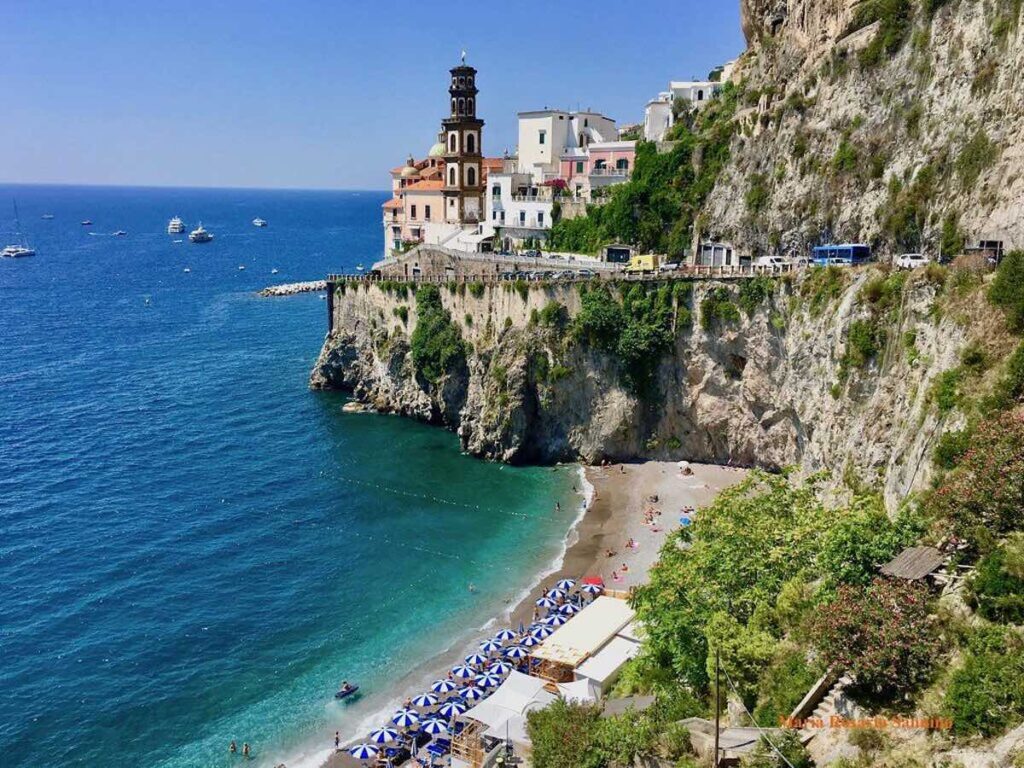
Atrani is tucked up next to Amalfi town, and only takes 10 minutes to walk between the two. You may decide to drive past as it’s only a tiny town, but if you get time to stop, it has a lovely medieval charm to it, with quaint streets and colourful houses. It has a town square, and a good handful of coffee shops and restaurants, and there’s a small sandy beach, which will most probably be much quieter than Amalfi. It’s a good bet for a few hours to escape the Amalfi Coast rat race.
Things to do on the Amalfi Coast with kids
Although the Amalfi Coast doesn’t exactly scream “perfect family holiday”, mostly because it can be tricky to get around with all the cliffs, stairs and high price tags, we actually found plenty of places we loved exploring with our kids. Some were right on the tourist trail, others were a little more tucked away, proper hidden gems we’re so glad we stumbled across.
Explore Amalfi Towns
It’s a given that the top activity to do here is get out and explore all the beautiful towns listed above. Make a day of each one, get to them early, wander the streets, mooch in the shops, maybe with some pocket money to spend and take in the charm of each place, as they are all so different with their own unique charm.
Best beaches on the Amalfi Coast
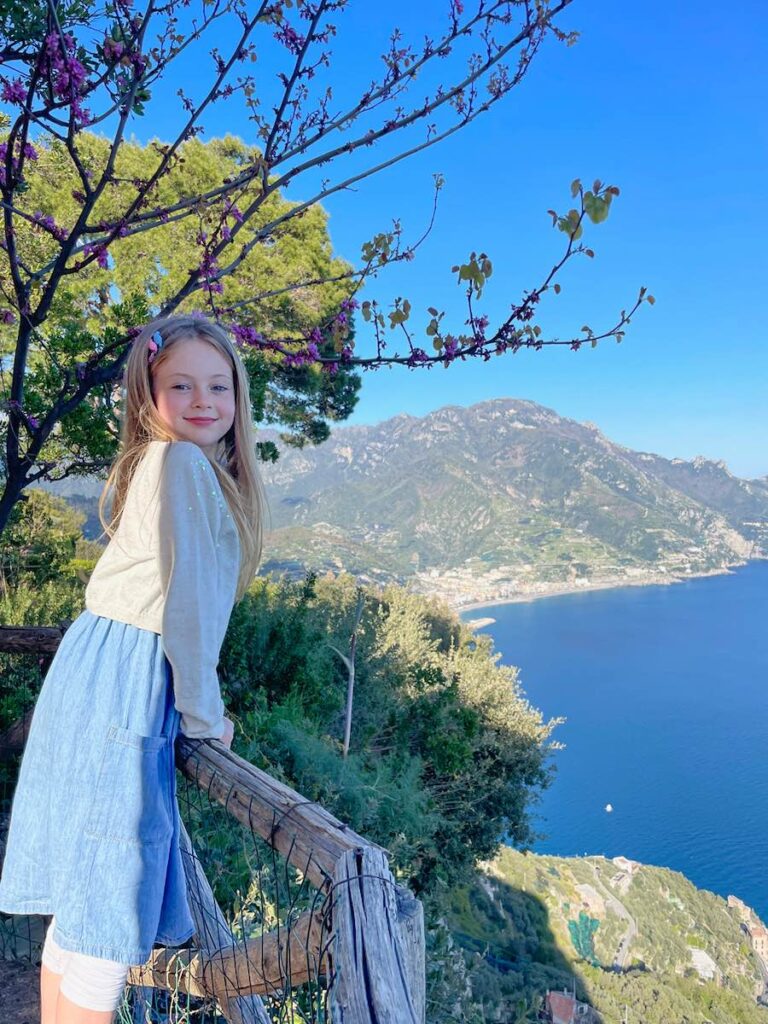
As beautiful as pebble beaches are, let’s be real, kids need sand to get covered in, to build sand castles and dig holes like feral animals! Maiori was our fav, with its calm waters, the kids paddled for hours. Minori is smaller and quieter, which was nice for a chill day. Amalfi’s Marina Grande is handy if you want a quick beach stop, as you have to pass through to get to many towns on the coast, but it’s pebbled. We didn’t make it, but people told us the little coves at Erchie and Conca dei Marini are worth going to. If you’re after surfing or windsurfing, you’ve got to go further down to Salerno or Paestum, that’s where you’ll find bigger surf.
Boat Trip on the Amalfi Coast
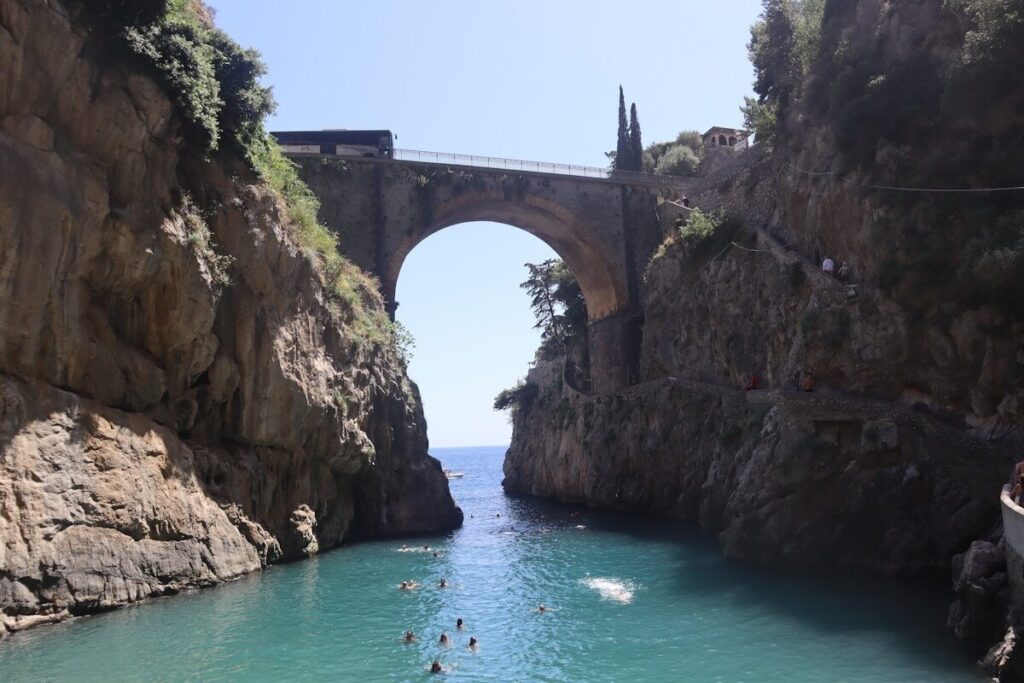
Getting out onto the water is amazing, with so much to see, stunning views, marine life and the additional option to get to beaches and coves that may only be accessible by boat. Try a shorter boat trip initially if you’re unsure if your kids get seasick. You may be better off hiring a private boat for the day if you want to have the freedom to explore where you want, when you want. The best bays to stop at with children on your boat trip to find calm, shallow waters are: Duoglio Beach (Amalfi area), Marina di Praia (Praiano), Arienzo Beach (Positano) and Conca dei Marini Bay. Fiordo di Furore is another worthy stop off, especially for dramatic photos of the cliffs and fjord, but swimming may be limited as the beach area is so small.
Snorkelling on the Amalfi Coast
You should try to tie this in with a boat day trip, for those who are visiting in summer, with slightly older children. There are some lovely spots to plunge your head underwater and see the marine life on offer. Punta Campanella and Bay of Leranto have protected calm waters with excellent visibility, Neptune grass, and fish like sea bream and barracuda. Fiordo di Furore is really picturesque and allows you to jump in and snorkel underneath its famous bridge. Li Galli Islands have tons of marine life and turquoise water, along with Marina di Praia (Praiano), a picturesque cove with underwater caves, surrounded by cliffs. Duoglio Beach (Amalfi) also has clear, calm waters accessible by boat, which is ideal if you want a quick snorkelling trip.
Amalfi Coast gardens
These were a highlight of our trip, as they not only allowed us to be in nature, with the most beautiful views, but they also allowed the kids to run around and burn off steam. If you’re visiting in the summer months, you’ll love the much-needed shade under the trees.
Villa Cimbrone
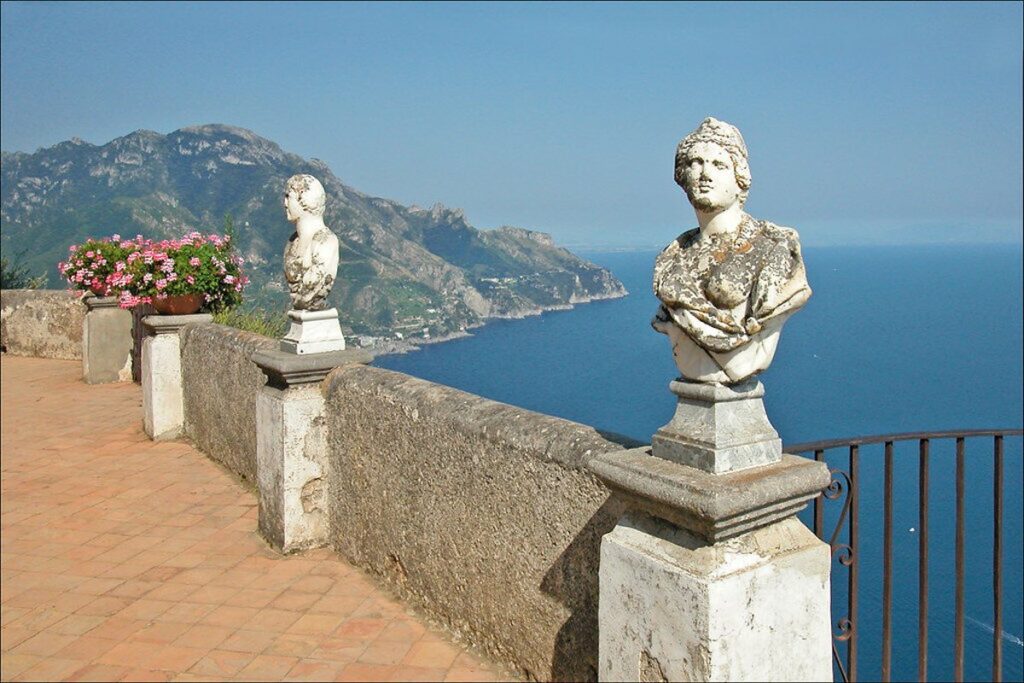
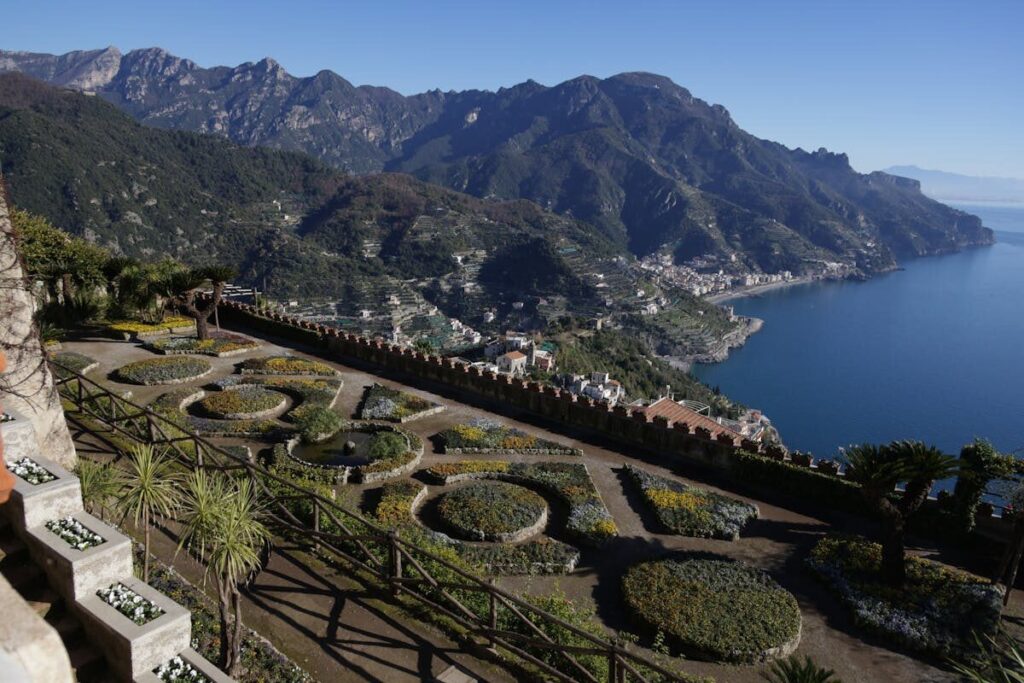
Villa Cimbrone is high up in the hills in Ravello and is full of exotic flowers, plants and wildlife. We loved the wisteria pergolas, the butterflies flittering around everywhere, and the little lizards running along all the stone walls. It’s famous for its Terrace of Infinity, where you can walk along a dramatic balcony overlooking the sea, lined with marble statues; the views are to die for! We’d recommend taking a picnic and spending a few hours there. It takes a while exploring all of the tiny paths, and it’s perfect for hide and seek.
Villa Rufolo
Still in Ravello, but right near the cathedral, there are historic gardens. They’re full of vibrant flower displays and have incredible coastal views, which inspired composer Richard Wagner. Giardino della Minerva in Salerno has a historic terraced botanical garden, filled with medicinal herbs and plants, originally used by medieval medical students. It’s not as big as the other two gardens mentioned, but it’s peaceful and an unusual stop off.
Amalfi Coast Hikes
Hiking in the area is world famous and gives such amazing options for cliffside views, lemon terraces, forests, waterfalls, and even historic villages.
Path of the Gods (Sentiero degli Dei)
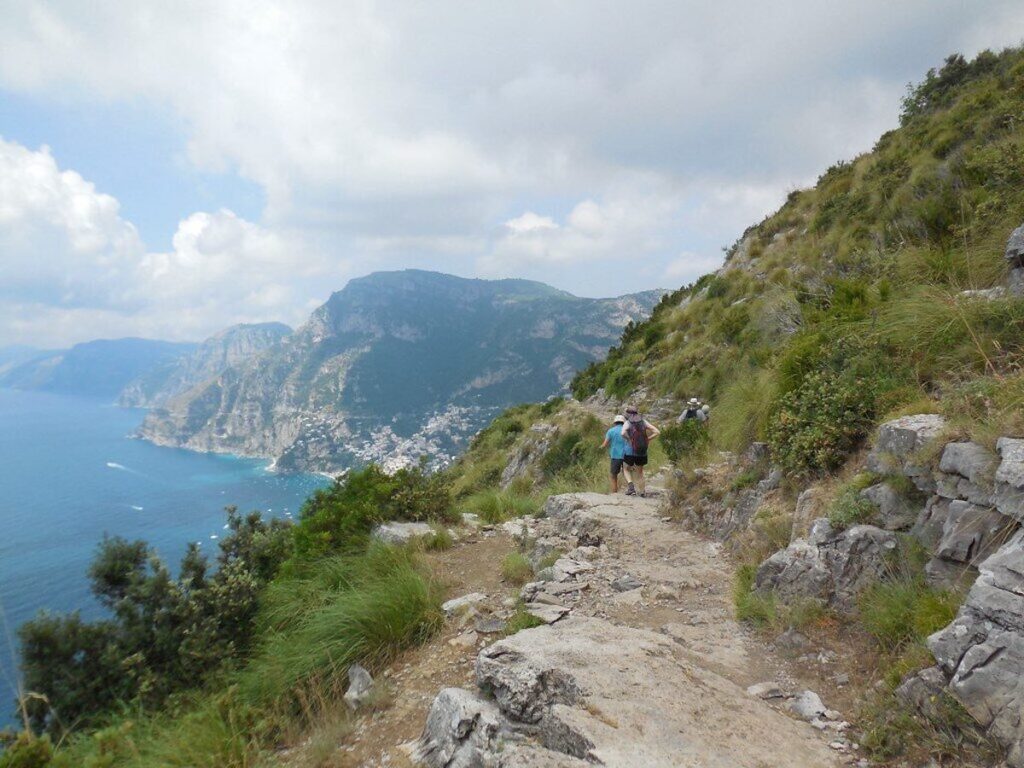
This is the most famous hike on the Amalfi Coast, and its name is derived from old Greek mythology, where it was believed that this coastal strip was home to the Gods, who spent their time walking amongst the stunning views. The route runs between Bomerano and Nocelle, high above Positano, and has open panoramic views the entire way. We’d say it’s perfect with children, definitely those who are 8+, as there’s no scrambling or climbing and the path is easy enough to follow. At times, there is a fair amount of exposure in places, however it’s not dangerous if you stay on the path and keep them close/ hold their hands.
If you’re thinking about doing the Path of the Gods with younger kids, it’s probably best to start in Bomerano and just walk a shorter section rather than committing to the full route. From what we’ve seen and heard, the views start pretty quickly, and that first stretch is one of the easier, wider parts of the trail. It makes sense to just take it at your own pace, see how the kids get on, and turn back when it feels like enough. You’ll still get a proper feel for the hike without overdoing it.
Path of the Lemons
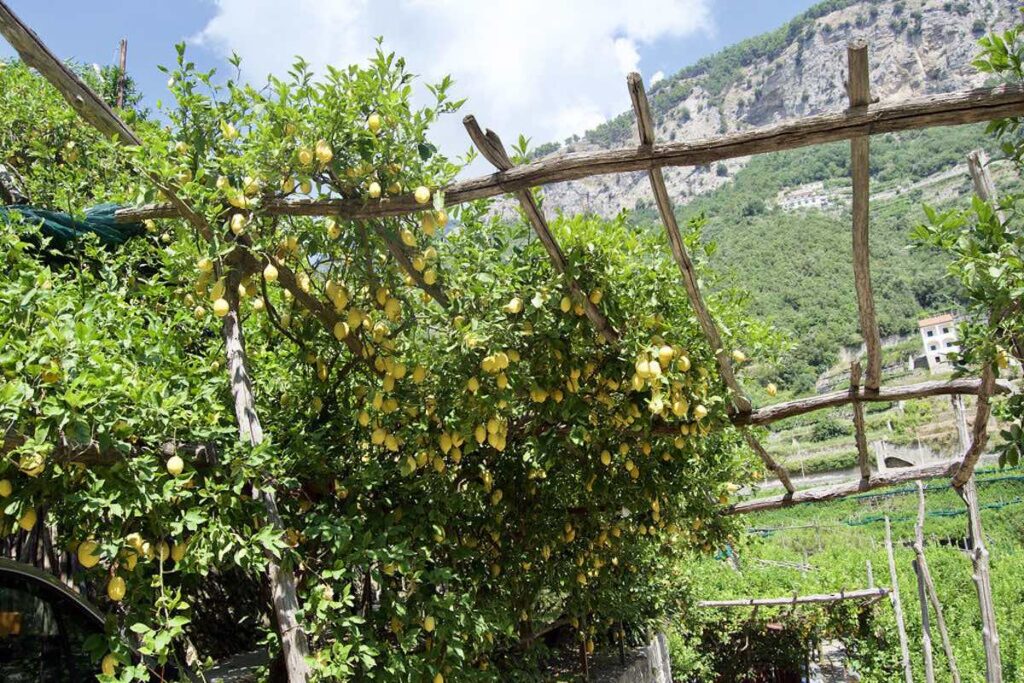
Another way of getting between Maiori and Minori is by following a lovely path called ‘the Path of the Lemons.’ It’s an easy walk, which will take between 1 and 1.5 hours, at a slow, steady pace, and if you’re visiting between late May and September, you’ll have the views of bright yellow lemons covering all the terraces surrounding you and the vibrant smell of citrus to go with it!
Amalfi Coast Food Experiences
Pizza on the beach
You don’t always have to dine out. One of our favourite food experiences in any country is grabbing the local cuisine and enjoying it on the beach. Happy kids playing, pizza all round, win-win!
Cooking Classes
Going one step further than eating all the pizza and pasta in Amalfi is to try to make it yourself in a cooking class. Many classes are child-friendly, set in idyllic locations, some in ancient farmhouses with great views. You may even get the chance to go to a local market with your teacher to pick your ingredients fresh on the day.
If you like more sweet treats, you could try Secret Garden Experience, in Positano, or Gelateria David in Sorrento, where you can learn how to make desserts, in particular gelato!
Lemon Farm Tours
Explore the lemon groves along the Amalfi Coast, along the famous ‘Lemon Trail.’ You’ll be able to learn how the fruit is grown and harvested, and you may even be able to try fresh lemonade, lemon cake or even homemade limoncello (for the grown-ups!)
Enjoying fresh lemon granita
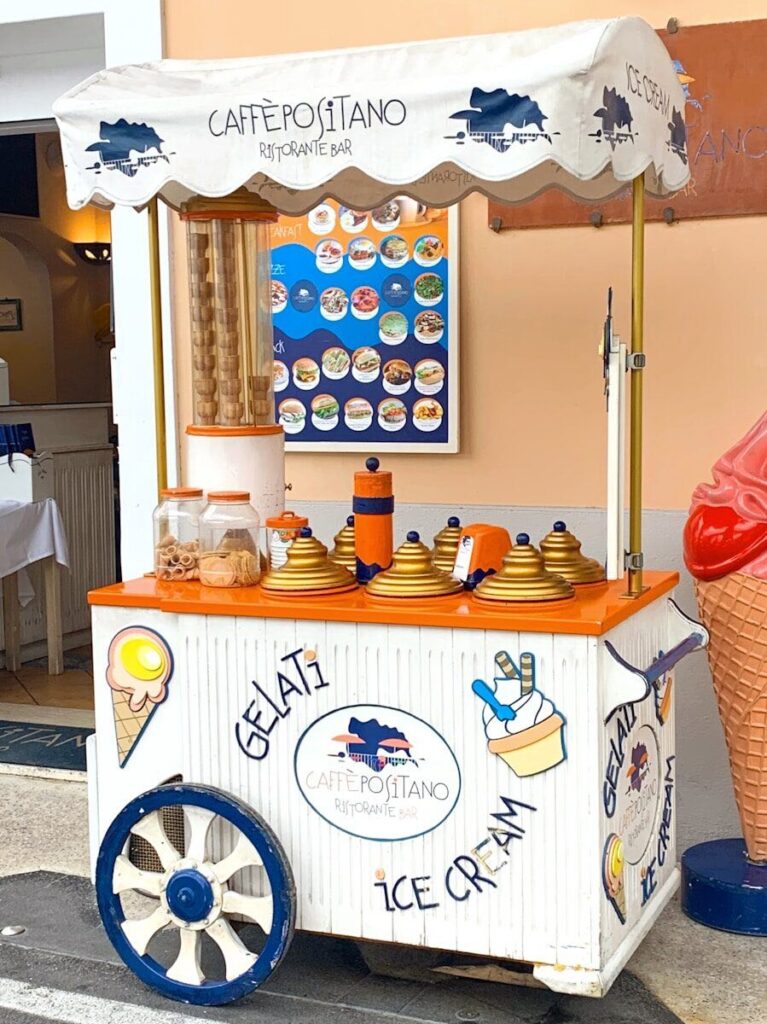
Our kids were utterly obsessed with the fresh lemon granitas (think lemon slushies). You can get them in most towns, sold in shops, but for the real, authentic deal, if you drive past the small granita carts at the side of the road, these are spectacular!
Visit Pompeii and Herculaneum
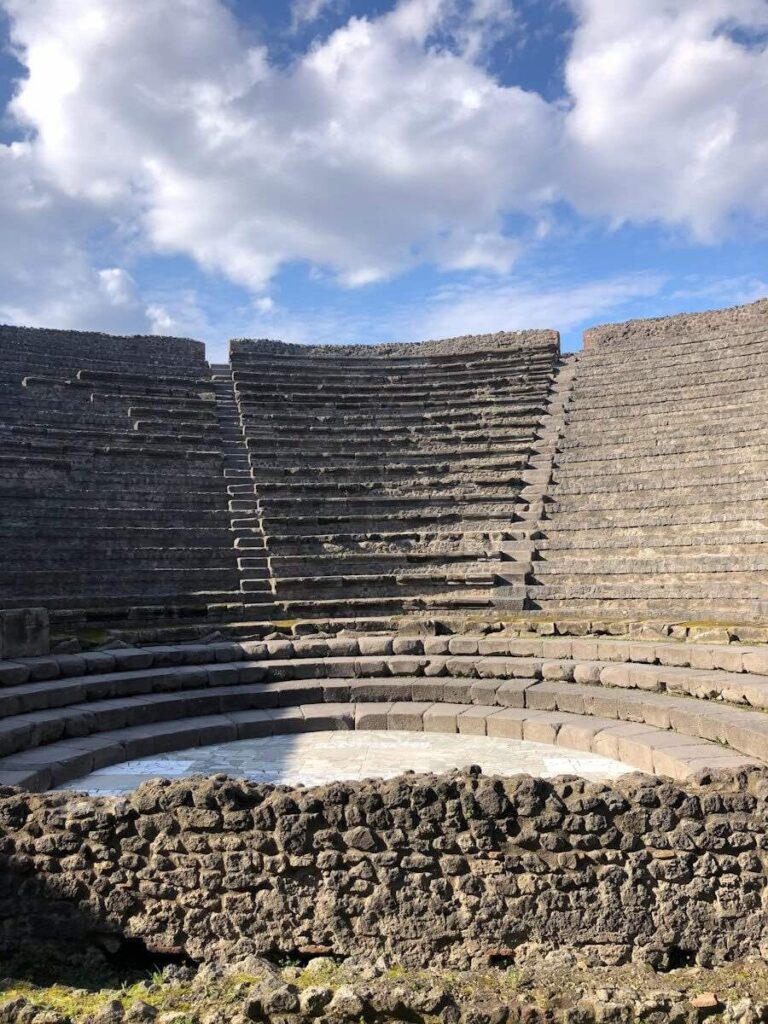
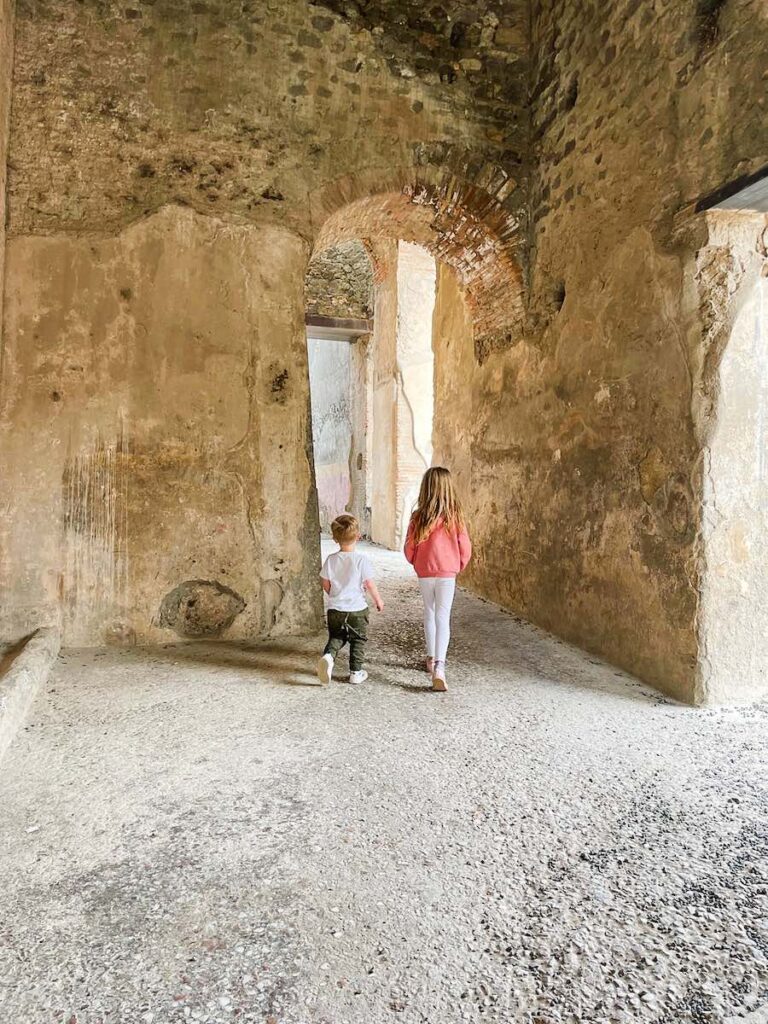
Not all classrooms have four walls, and here you’ll be able to teach your children about the eruption of Mount Vesuvius whilst showing them the destruction left behind. You can wander the streets, see the ruins of houses and shops and even see plaster casts of people who were caught in the eruption, perfectly preserved in their final moments. It’s sobering, but learning this way has a much greater impact than reading about it in books only. Our kids started role-playing, with what exactly they would have done if they were living there during the eruption, which really got their imaginations going!
Adventurous activities on the Amalfi Coast
Amalfi Coast Ziplining
One of the most exciting places to try ziplining on the Amalfi Coast is with Zip Line Italia around the dramatic Fjord of Furore, where you zipline between cliffs high above the sea. It’s set in the hills between Amalfi and Positano, making it easy to combine with exploring nearby villages.
Rock climbing on the Amalfi Coast
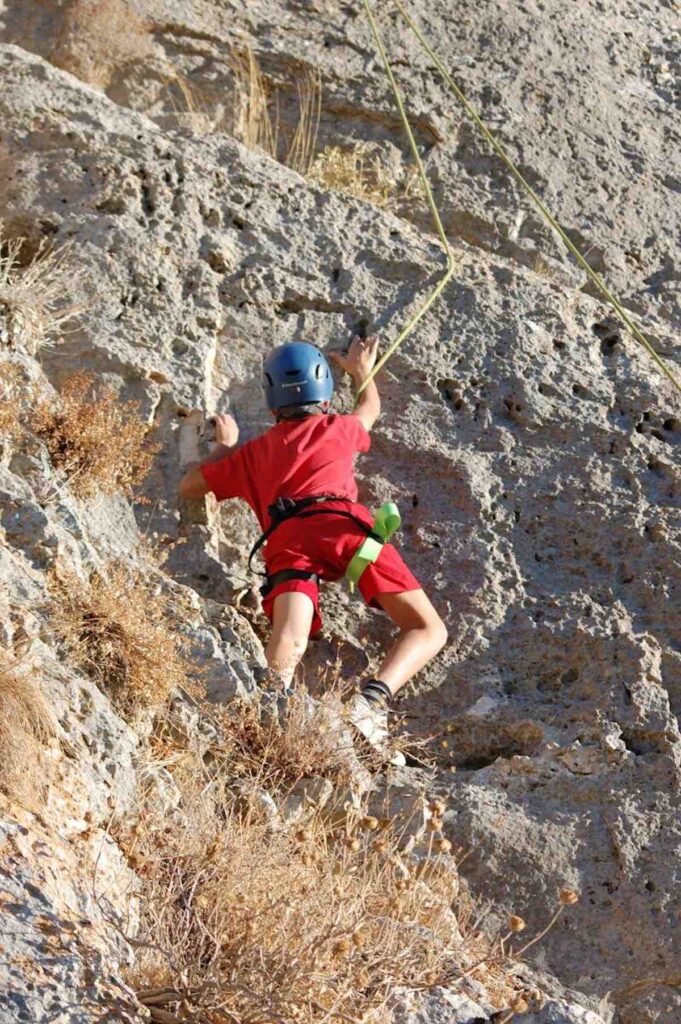
There are multiple places you can climb in the Amalfi Coast with spectacular views. Toonado offers guided climbs for beginners on climbing walls along the Path of the Gods, with incredible views, in Punta Campanella and in Montepertuso, the village that sits above Positano.
Paddle Boarding on the Amalfi Coast
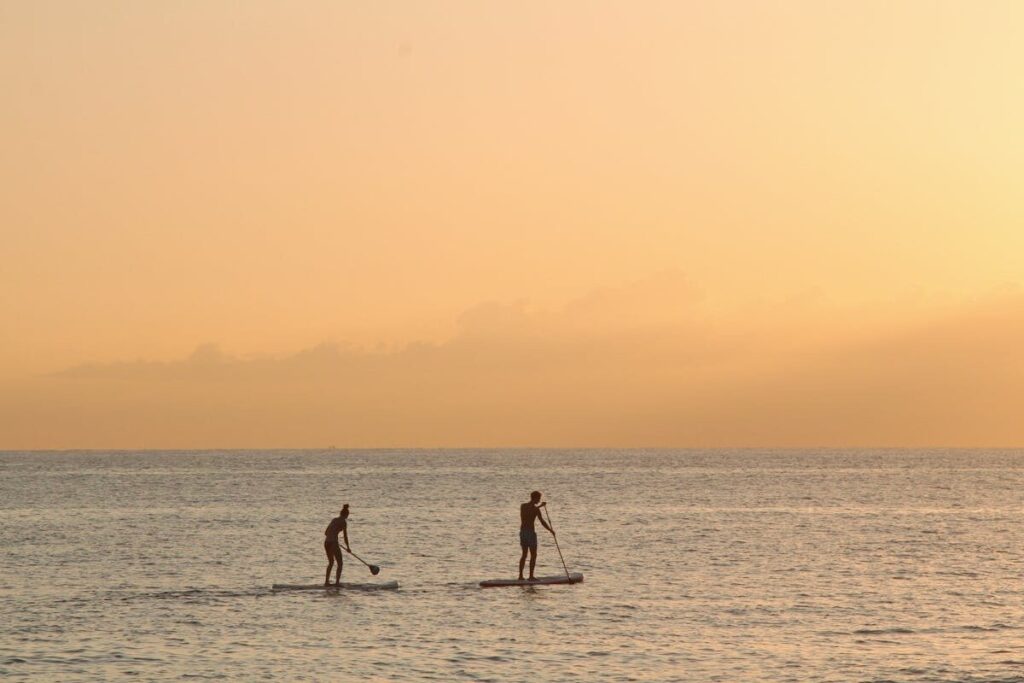
For families wanting to try paddleboarding on the Amalfi Coast, the calmest and most beginner-friendly waters are in Positano, Maiori, and Cetara. In Positano, Sup Club Positano offers rentals and lessons from Fornillo Beach, where mornings are usually the smoothest for first-timers. Maiori has a wide, open beach with gentle conditions and plenty of space for kids to learn, while Cetara is quieter and great for guided paddles along calm stretches of coastline.
Hunting for sea glass on the Amalfi Coast
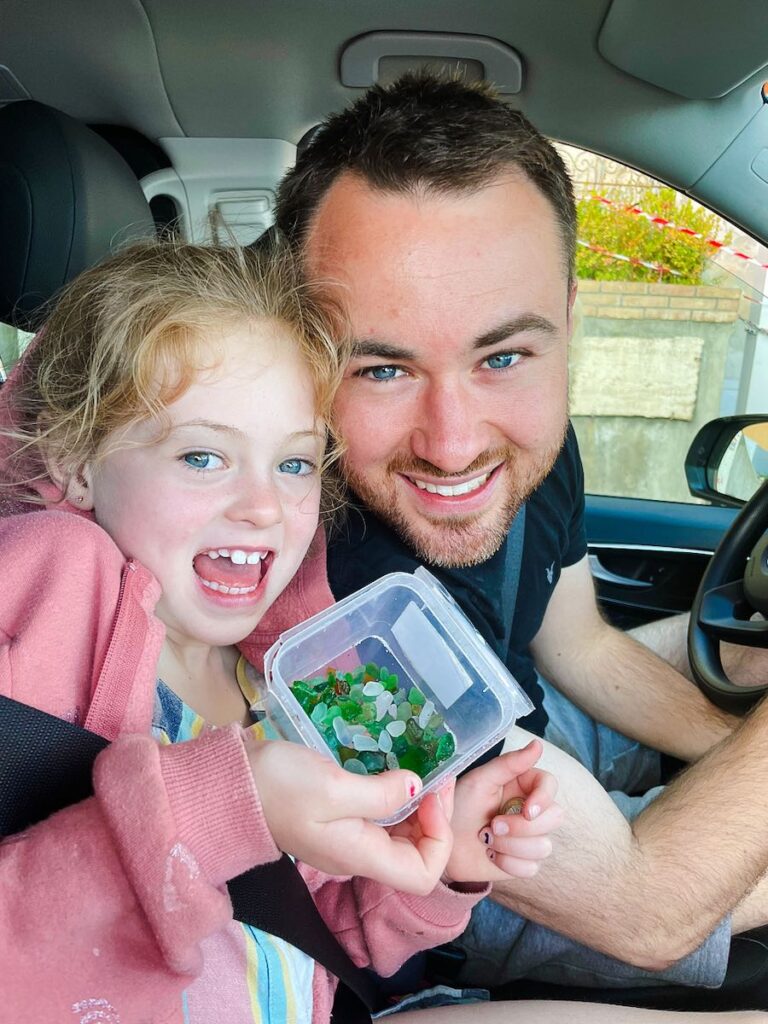
The beaches on the Amalfi coast are full of beautiful sea glass, which we had lots of fun hunting for. They’re safe for children to pick up as they are perfectly rounded and smoothed off from the friction with the pebbles on the shore. We found tons of green pieces, with the occasional blue, orange and purple segments.
Play areas on the Amalfi Coast
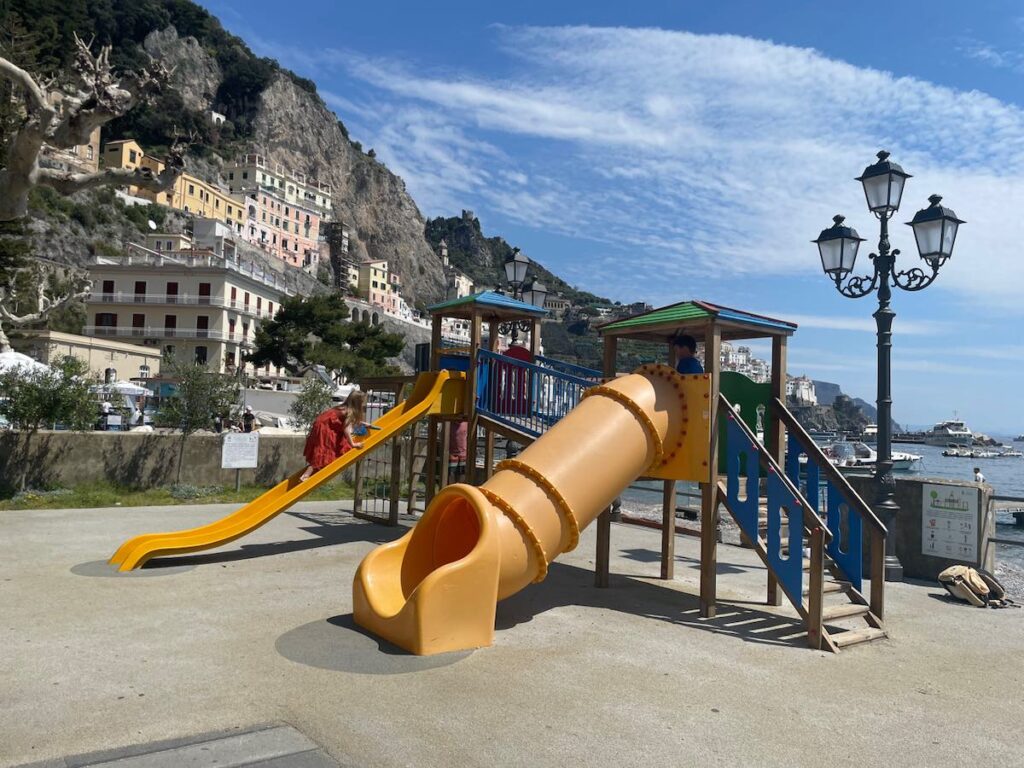
There aren’t tons of play areas in the area, but there are a few, where kids can burn off some steam. The main one is located right on the boardwalk/ seafront in Maiori, which has the classic swings and slide, but also some small rides for younger children. Amalfi also has a seafront play area Parco ‘La Pineta,’ which offers really nice views of the sea. We happily sat on a bench here and tucked into some pizza, while the kids happily played. 30 minutes west from Positano near Sorrento, you’ll find ‘Parco Giochi Don Luigi Verde’, which is another good stop off for little ones.